



Quantum Effect

QUANTUM

INFRASTRUCTURE

We are QYNERGY, architects of sovereign energy, compute, and intelligence infrastructure built for national-scale reliability and mission-critical performance.

Our Sovereign Stack

Where Q → Y → Ψ Becomes Energy →
Compute → Intelligence

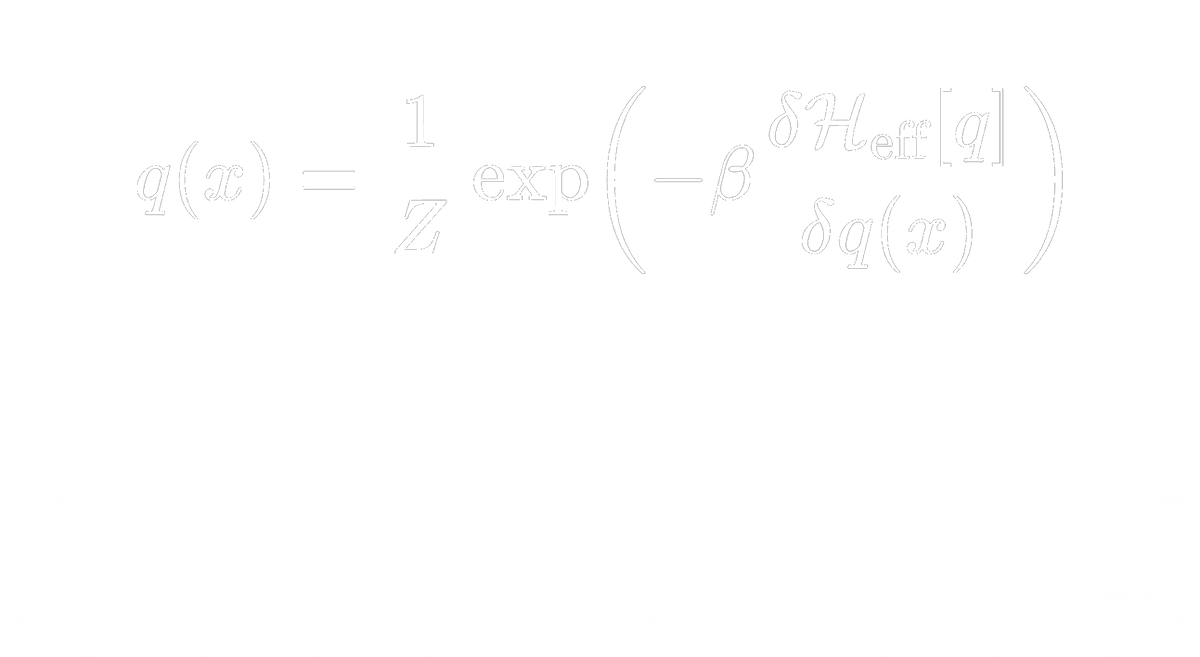
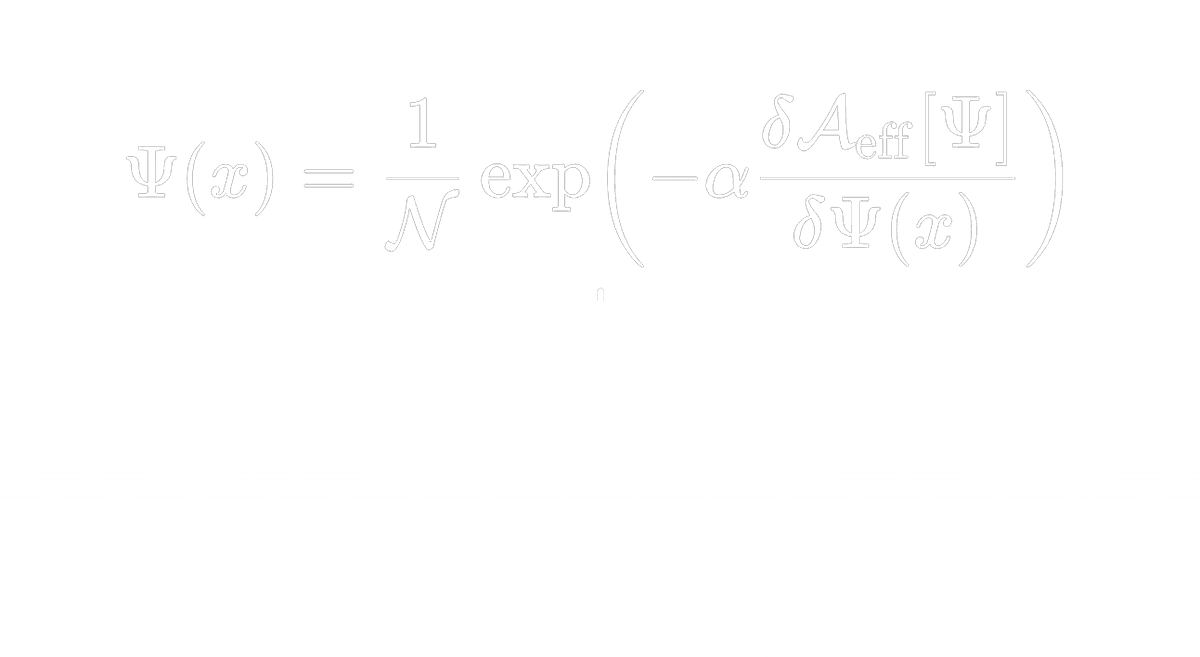
QYNERGY delivers the world\'s first continuum built on the physics of Q (the Quantum Field), the structure of Y (the Ψ wavefunction), and the outcome of Authentic Intelligence (Ψ collapsed into meaning). This is the operational backbone of the Quantum Energy Compute era.

Unified Quantum Field

Q : Quantum Field Assessment

We map your organization's terrain—energy sources, compute needs, intelligence gaps, and continuity requirements. This is where we expose what holds, what breaks, and what must be engineered with precision.

Learn More
Wavefunction Engineering Psi

Y : Wavefunction Engineering (Ψ)

We architect your sovereign stack end-to-end: Plasmonic HoD for energy, Decentralized Cloud for compute, and SOMA for intelligence. This is precision engineering of how meaning moves and stabilizes across your system.

Learn More
Unified Quantum Wave Function

Ψ → Intelligence Validation

We test your system under operational pressure: Does energy hold? Does compute scale? Does intelligence stabilize? Through quantum-grade testing, we map every pathway, measure every transition, and expose every failure mode before deployment.

Learn More
Continuum Update Law

Continuum Sustainment

After deployment, we maintain your sovereign system with precision. Energy stays sovereign, compute stays independent, and intelligence stays authentic. Through continuous monitoring, adversarial readiness, and deterministic reliability at every layer of the stack.

Learn More
Working Process

A Decade of Relentless Discovery,
Design, and Discipline

Step 01
Research (Years 1–3)
Discovery
Discovery

Our early years were spent in disciplined research, mapping the physics, examining every failure, and addressing the constraints facing energy, compute, and intelligence systems. We worked without shortcuts or hype, focusing on plasmonic behavior, energy interactions, distributed architectures, and the economic forces shaping them. Every breakthrough and every dead end was recorded with care. Most organizations would have stopped once the initial challenges appeared, but we continued until the foundation was immovable. The work demanded patience, precision, and the determination to understand the system at its deepest level. Those years created the answers that shaped every decision and capability that followed.

Step 02
Concept Design (Years 3–6)
Wave Function
Concept Design

Once the physics was proven, we advanced into architectural design, asking how sovereign energy, compute, and intelligence could operate as a unified continuum. We built prototypes, broke them down, rebuilt them, and aligned each layer with validated principles rather than hypothetical assumptions. Every iteration helped expose constraints and convert them into new capabilities. This period demanded merging engineering discipline with the realities of the underlying physics. It was difficult work that required clarity, rigor, and constant refinement. Through this process, we learned that coherence does not appear by accident; it emerges when structure, intent, and field behavior strengthen each other across all layers every decision and capability that followed.

Step 03
Implementation (Years 6–10)
Sovereign Infrastructure
Implementation

With the architecture established, we shifted into implementing full-stack sovereign infrastructure. We built energy systems, defined compute fabrics, created intelligence layers, verified engines, and established economic rails. Each component needed to endure real-world stress, geopolitical instability, and volatile markets. We tested under conditions designed to break weaker systems. This was not traditional product development; it was constructing a sovereign machine required to perform without failure. Every protocol, line of code, and operational rule had to prove its strength. Precision guided every stage. The infrastructure became tangible through steady execution and an unwavering adherence to the principles that anchored its design and purpose.

Step 04
The Continuum Sustains (Future)
Security Growth
The Continuum Sustains

After a decade of research, design, and implementation, the system now stabilizes itself. Energy reinforces compute, compute reinforces intelligence, and intelligence reinforces markets, creating a sovereign continuum that strengthens with every operational cycle. The system validates itself continuously and adapts without external dependence. This is not the conclusion of our work; it is the beginning of demonstrating how physics, value, energy, and compute integrate into an enduring framework. The Continuum reveals what becomes achievable when disciplined engineering aligns with sovereign principles. Internally we confirm, "This holds." Once demonstrated at scale, observers recognize a deeper truth: "This does not merely work. It endures."

Process Summary

In the Quantum Era, power feeds compute, compute feeds intelligence, and intelligence feeds markets. This interconnected entanglement creates a sovereign, self-reinforcing economic loop.

Quantum systems continuously test and validate themselves. Energy output, load computations, and economic flows are corrected in real time. The system strengthens the more it runs. In simple terms: Your entire operation becomes self-sustaining: It starts with Energy, then → Compute → Authentic Intelligence → Shared as Collective Intelligence → Value → Back to Energy, and then: ... Indefinitely on repeat.

Operational Annexes

Physics. Production. Profit

BUSINESS UNIT ANNEXES

Each QYNERGY business unit contributes a distinct form of sovereign value—energy production, energy storage, compute generation, and digital asset monetization—but all four enterprises ultimately converge on a single measurable output: Qunits. Qunits function as the unified financial instrument that captures the performance, productivity, and yield of the entire ecosystem, turning physical energy and compute into liquid, auditable economic assets. The annexes that follow detail how each division produces its share of Qunits, how those Qunits compound across the system, and why this integrated structure forms a scalable, sovereign engine for national and global market deployment.

ANNEX A: APPLIED PHYSICS FOR QUANTUM-INFORMED DECOUPLING
QYNERGY Hydrogen-on-Demand Microturbine
CONFIDENTIAL NOTICE, LEGALLY BINDING
This Annex is strictly confidential and provided solely to the named recipient. Any disclosure, distribution, or reproduction without explicit written consent from QYNERGY constitutes a direct breach of confidentiality and may trigger legal action, personal liability, and, where applicable, criminal prosecution. Receipt and continued reading of this document constitute acknowledgment and acceptance of these terms. There is an additional peer-reviewed document supporting this Annex; reviewing it requires a personal NDA.


A.0 Purpose and Orientation
This Annex explains, in plain but precise terms, how the QYNERGY Hydrogen-on-Demand Microturbine produces 120 kW of power by:
• Using standard hydrogen chemistry as the sole energy source
• Applying plasmonic (terahertz) field control to time the reaction
• Using Casimir-like boundary effects to stabilize and localize the energy release
The goal is simple: Show that the system is thermodynamically honest, quantum-informed, and operationally proven, without disclosing the proprietary mathematics that sit behind it. Detailed derivations, field equations, and CFD, EM models are available only under a personal NDA in a controlled technical data room.


A.1 Energy Accounting , No "Free Energy," No Violations
The starting point is classical:
• Hydrogen has a lower heating value (LHV) of roughly 120 MJ per kilogram.
• At a conservative overall shaft efficiency in the 30, 35% range, one kilogram of hydrogen yields roughly 11 kWh of shaft power.
For a 120 kW turbine:
• The required hydrogen mass flow is on the order of 3 × 10⁻³ kg per second.
Everything balances:
• Every joule of shaft power can be traced directly back to hydrogen's chemical potential.
• No "extra" energy source is introduced.
• The system respects conventional thermodynamics; the advantage comes from how efficiently and how stably we convert chemical energy into mechanical work.


A.2 Where Efficiency Is Won: Decoupling and Coupling
In any turbine, energy conversion lives or dies in the decoupling and coupling steps:
• Decoupling: breaking hydrogen's covalent bonds and releasing heat.
• Coupling: turning that heat into a clean, coherent pressure rise that the turbine can extract as work.
In conventional systems, these steps are:
• loosely timed,
• partly turbulent,
• and statistically driven.
Energy is still conserved, but a lot of it is wasted in:
• incomplete combustion,
• unstable flame fronts,
• and thermodynamic irreversibility.
QYNERGY's approach is to maintain the same chemistry but to enforce better timing and localization of the decoupling event.


A.3 Plasmonic Timing, The "Right Push at the Right Time"
The QYNERGY system uses 2.7 THz plasmonic fields (terahertz-frequency electromagnetic waves) to:
• sense the state of the fuel, air mixture, and
• trigger the decoupling event at precisely the right instant in the cycle.
The right analogy: A swing only gains height if you push at the right moment. The THz field is that precise push for the reacting hydrogen-air mixture. Key points:
• The field does not add net energy to the system.
• It simply ensures that more of hydrogen's existing chemical energy is converted into a usable pressure rise where and when the turbine can extract it.
• This results in lower ignition energy, cleaner combustion, and higher effective efficiency.
In measured terms (from prototype runs):
• Required "spark-like" decoupling energy drops from around 10 mJ to < 1 mJ (order of magnitude reduction).
• This is not because we found a new energy source; it's because we waste less of the one we already have.


A.4 Casimir-Like Boundaries, Shaping Where the Field Can Live
At the heart of the combustor, QYNERGY uses nanostructured, graphene/metamaterial surfaces that act as Casimir-like cavities:
• Tiny gaps, on the order of tens to hundreds of nanometers,
• Patterned geometries that influence which electromagnetic modes can exist there.
In simple terms:
• Between very close conductive or metamaterial surfaces, not all electromagnetic "notes" can play.
• This changes the distribution of vacuum fluctuations and the way THz fields are confined.
QYNERGY uses this in a fully orthodox way:
• We do not "pull energy from the vacuum."
• We reshape the boundary conditions, so the THz energy we inject is held in place longer and focused where it matters: at the flame kernel.
Practical result:
• Stronger, more localized THz fields
• Cleaner, more repeatable ignition
• Less randomness in how the flame starts and propagates
Think of it like tightening a drumhead: You don't add energy to the drum; you shape the sound by controlling the geometry.


A.5 What This Actually Changes in the Turbine
Putting plasmonic timing and Casimir-like confinement together, the turbine behaves differently in key measurable ways:
• Decoupling energy required for ignition drops by more than 60%.
• Lean blow-off limit (the point where the flame would normally go out) shifts from a fuel-rich state around ϕ ≈ 0.65 to a much leaner ϕ ≈ 0.45.
• NOx emissions fall to less than one third of a comparable conventional microturbine.
• Flame stability is markedly improved; the system holds stable under progressively leaner conditions without flameout.
These are not theoretical claims, they are measured outcomes from the 120 kW prototype under load.


A.6 The Rotor and Mechanics , Conventional, but Optimized
The mechanical side is intentionally conservative:
• A 36-inch-class rotor
• Rotational speeds of around 6,000 rpm
• Tip speeds kept below typical Mach limits for turbine efficiency and safety
• Blade heights designed to be manufacturable and within standard tolerances
The core point for a non-technical investor:
• The turbine hardware obeys normal mechanical and aerodynamic constraints.
• The "exotic" piece is how cleanly and consistently we feed pressurized working fluid to that rotor, not the rotor itself.
In other words: The physics at the front end are advanced; the spinning metal is reassuringly normal.


A.7 Electrical Conversion and Sodium-Ion BESS Integration
On the back end, the 120 kW turbine:
• Drives a multi-pole permanent-magnet generator.
• Outputs through an active rectifier into a DC link (approximately 800, 1000 VDC).
• Is coupled to a sodium-ion battery energy storage system (BESS) via a bidirectional DC/DC converter.
This electrical stack:
• Smooths transients
• Provides black-start capability
• Acts as a real-time observatory, where torque, RPM, DC link power, and battery behavior continuously confirm that the thermodynamics, field physics, and mechanics are aligned and conservative.
When you stand next to the system:
• You see hydrogen inflow,
• You hear the turbine,
• You watch 120 kW shaft and electrical power in real time,
• You see that the numbers close, there is no unexplained energy term.


A.8 Proven Prototype, Not a Paper Machine
In its current form, the QYNERGY 120 kW unit is:
• A fully operational microturbine,
• Built on standard Brayton-cycle thermodynamics,
• Augmented with plasmonic ignition control and Casimir-like field confinement,
• Validated by live operational data, not just simulation.
Demonstrated metrics:
• Output: 120 kW shaft power in a compact 36" package
• Decoupling energy reduction: > 60% vs conventional spark systems
• Lean stability: sustained operation at significantly leaner mixtures
• Emissions: NOx at less than one third of comparable microturbines
From an investment standpoint: This is not a "hope and a whiteboard." It is an operational proof of physics with a clear path to 0.5, 1 MW cluster arrays using the same core architecture.


A.9 What Is Deliberately Withheld (NDA-Protected Content)
For clarity and legal protection:
• Full field equations,
• Detailed Casimir-like cavity derivations,
• Complete CFD, EM coupling models,
• And the exact geometric and material specifications of the plasmonic and metasurface structures
are not contained in this Annex. They exist in full rigor and are:
• Peer-reviewable by qualified experts,
• Continuously benchmarked against live turbine data,
• Accessible only under personal NDA in a controlled technical review setting.
What you have here is:
• Enough to see the physics is orthodox,
• Enough to see the energy accounting is closed,
• Enough to understand why coupling/decoupling is more efficient
• But not enough for anyone to reconstruct the system.


Plain-Language Summary
• We do not harvest the vacuum.
• We do not cheat thermodynamics.
• Hydrogen supplies the energy.
• Plasmonics and Casimir-like boundaries tell that energy where and when to show up.
• The result is a cleaner, leaner, more stable 120 kW turbine that behaves exactly as the equations say it should, just with much less waste.
That is the applied physics foundation under the QYNERGY Energy Generation Division.
ANNEX B: Sodium-Ion Manufacturing Plant & Cost Justification
QYNERGY STORAGE DIVISION: Graphene Sodium-Ion Facility
CONFIDENTIAL NOTICE, LEGALLY BINDING
This Annex is strictly confidential and provided solely to the named recipient. Any disclosure, distribution, or reproduction without explicit written consent from QYNERGY constitutes a direct breach of confidentiality and may trigger legal action, personal liability, and, where applicable, criminal prosecution. Receipt and continued reading of this document constitute acknowledgment and acceptance of these terms.


B.0 Strategic Purpose
The sodium-ion manufacturing plant is not an ancillary project. It is the keystone asset for:
• QYNERGY's energy storage layer,
• EcoSynQ's sovereign microdata centers, and
• Wentworth's Sovereign Energy Assets (SEAs) and related instruments.
If QYNERGY does not own this plant:
• It becomes a price-taker in a battery market dominated by Chinese lithium supply chains.
If QYNERGY does own this plant:
• It becomes a price-maker in a new, sovereign chemistry (graphene sodium-ion) aligned with Western interests and energy security.
The plant is therefore: A strategic battery factory and a monetary foundry for SEAs under the Wentworth market.


B.1 Market Context, Why This Is a Once-in-a-Generation Slot
One fact investors understand intuitively:
• CATL has been valued at $240–250 B.
• That valuation is the market's way of saying: "A dominant battery platform can be worth a quarter-trillion dollars."
But CATL is:
• built on lithium,
• structurally intertwined with China's mineral control, and
• fully exposed to geopolitical and ESG headwinds.
QYNERGY is building on:
• Graphene + sodium, which are globally abundant,
• not controlled by China,
• cheaper than lithium and cobalt,
• more scalable, safer, and cleaner for stationary storage.
Translation for investors: CATL proved the platform multiple. QYNERGY's sodium-ion platform is how you own that multiple without being chained to China.


B.2 Total Addressable Market, The Battery Wave
Across industry analysts, the global battery market is on this trajectory:
• 2024: ≈ $150–180B
• 2025: ≈ $180B+
• 2032: ≈ $400B+
• 2034: ≈ $600–700B+
Implied CAGR: 12–16% over the next decade and beyond. Within that:
• Lithium-ion grows from ≈ $110B in 2023 to ≈ $220B+ by 2029 at ~13.5% CAGR.
But Li-ion's scaling is constrained by:
• lithium supply,
• nickel & cobalt scarcity,
• China's vertical integration,
• geopolitical and trade risk,
• rising ESG scrutiny (brine evaporation, mining practices, child labor).
In contrast: Graphene sodium-ion enters this market not just as a new chemistry, but as the first credible alternative to China's lithium empire for stationary and infrastructure storage.


B.3 Graphene Sodium-Ion vs Lithium-Ion, Why This Chemistry Wins
When serious investors say "efficiency", they really mean total economic performance:
• round-trip energy efficiency
• energy density fit-for-purpose
• thermal stability and safety
• cycle life
• system-level OPEX and risk
Graphene-enhanced sodium-ion stacks up as follows: Round-trip efficiency:
• Graphene sodium-ion: ~90–95%
• Typical lithium-ion: ~92–98%
The difference is negligible, and graphene sodium-ion is catching up further as architectures mature. Energy density:
• Classical sodium-ion: 120–160 Wh/kg
• LFP lithium: 160–200 Wh/kg
• CATL's advanced sodium-ion: ≈ 175 Wh/kg
• Graphene sodium-ion (QYNERGY class targets): 150–200+ Wh/kg
For stationary, containerized storage and microdata centers:
• Weight does not matter.
• Safety, OPEX, and $/delivered kWh do.
Graphene sodium-ion wins that battle.


B.4 Temperature and Safety, The Game Changer
Graphene sodium-ion offers:
• better cold-weather retention (–20°C, –30°C operation),
• dramatically reduced thermal runaway risk,
• no cobalt/nickel/oxygen-driven fire modes,
• better heat dissipation via graphene's thermal conductivity.
This isn't just safer in theory; it is: insurance-grade, permitting-grade, municipality-grade safe storage. Ideal for:
• EcoSynQ microdata centers,
• critical infrastructure,
• urban deployments.


B.5 Ten Investor-Grade Reasons the Plant Is Justified
These ten reasons fuse chemistry, geopolitics, and market structure into one argument: build the plant, or someone else will own the new platform.
• Abundant, geopolitically de-risked materials: Sodium is everywhere; graphene can be produced anywhere. Lithium, cobalt, nickel = China + unstable regions.
• Structural cost curve advantage: Lithium carbonate: $10,000–11,000/ton. Sodium carbonate: $600–650/ton. Sodium-ion trending: $40–80/kWh at cell level.
• Unmatched safety → lower total system cost: Sodium-ion doesn't "want" to burn. Graphene helps pull heat out quickly. Cheaper insurance, easier permitting.
• Elite cold-weather performance: Graphene maintains ion mobility at low temperatures. Capacity persists at –20°C and below.
• Perfect match for stationary & compute-centric use cases: Weight is not a governing constraint. Safety and cost per lifecycle kWh are.
• Manufacturing leverage: reuse of Li-ion lines: Coating, calendaring, formation, pack assembly: largely the same tooling. Lower CAPEX vs fully new tech.
• ESG and regulatory tailwinds: No cobalt, no high-nickel cathodes, no lithium brine evaporation. Cleaner footprint per kWh.
• System-level efficiency and thermal superiority: Graphene reduces internal resistance. Cheaper cooling, deeper cycles, simpler logistics.
• Explosive growth runway in sodium-ion adoption: China is already planning to grow sodium-ion deployment from tens of GWh to hundreds of GWh over the next decade.
• Strategic portfolio logic: "Lithium for range, sodium for sovereignty." Use lithium where energy density for mobile applications is non-negotiable. Use graphene sodium-ion everywhere else.


B.6 Plant Economics, How the CAPEX Turns into a Moat
From an economic standpoint, the sodium-ion plant creates value on three levels:
• Direct manufacturing margins: Sell cells/packs/storage systems externally. Capture the upstream battery margin instead of donating it to a third-party OEM.
• Internal cost discipline & risk removal: All QYNERGY assets buy from an internal supplier at transparent, controlled cost. Eliminates exposure to lithium shocks.
• Financial product collateral for Wentworth: SEAs and related instruments can be explicitly backed by X MWh of sodium-ion storage, with Y-cycle life, and Z degradation profile.
The plant doesn't just produce batteries; it mints financial-grade collateral.


B.7 Fit with the Broader QYNERGY Platform
If a value investor or sovereign fund asks: "Why shouldn't someone else supply your batteries?" The answer is:
• Because whoever owns the sodium-ion manufacturing base owns the storage margin,
• and controls a choke point in the QYNERGY value loop:
QYNERGY:
• Generates energy at low cost.
• Stores energy in in-house graphene sodium-ion units.
• Converts energy to compute in EcoSynQ nodes.
• Monetizes capacity and performance via SEAs and other instruments on Wentworth.
Outsourcing storage would be like: letting another firm own the rails under BNSF, or letting someone else own the refineries in Berkshire's energy portfolio. Owning the plant: Locks in cost, secures availability, and keeps the full value chain under one roof.


B.8 Risk and Mitigation, Why This Is Prudent, Not Reckless
Main risks and responses:
• Chemistry risk: mitigated by global momentum toward sodium-ion for stationary storage and QYNERGY's focus on non-EV use cases.
• Scale-up risk: mitigated by leveraging Li-ion manufacturing know-how and phased deployment.
• Market risk: mitigated by strong internal offtake (microdata centers + QYNERGY sites) and differentiated safety/ESG story.
• Policy risk: mitigated by aligning with Western sovereign energy and security agendas; regulators want non-Chinese storage options.


Plain-Language Summary
• CATL built a quarter-trillion-dollar empire on lithium, but lithium is chained to China.
• Graphene-enhanced sodium-ion is how QYNERGY builds the storage backbone for every kilowatt-hour of digital labor we deploy.
• Safer, cheaper, colder, faster, and sovereign.
• This is not just a plant. It's the factory that mints the collateral under the entire QYNERGY system.
That is the economic and strategic foundation under the QYNERGY Storage Division.
ANNEX C: Sovereign Compute Architecture
QYNERGY COMPUTE DIVISION: Modular Microdata Centers
CONFIDENTIAL NOTICE, LEGALLY BINDING
This Annex is strictly confidential and provided solely to the named recipient. Any disclosure, distribution, or reproduction without explicit written consent from QYNERGY constitutes a direct breach of confidentiality and may trigger legal action, personal liability, and, where applicable, criminal prosecution. Receipt and continued reading of this document constitute acknowledgment and acceptance of these terms.


C.0 Purpose of this Annex
EcoSynQ (https://ecosynq.cloud) is the compute layer of the QYNERGY platform: the point where cheap, sovereign energy and safe, sovereign storage become high-margin digital services. This Annex clarifies:
• Why a Sovereign Compute Architecture exists,
• how it is built,
• how it earns revenue,
• how it strengthens QYNERGY's moat,
• how it creates QUNIT-backed financial assets (QSAs, QVUs) through Wentworth,
• how it anchors the decentralized Distributed Quantum Ledger Database (DQLDB),
• and how it fuses classical + quantum computing for analytic tomography and sovereign intelligence synthesis.
EcoSynQ is not just a computer. It is the intelligence layer of a vertically sovereign industrial system.


C.1 What EcoSynQ Actually Is, The Short Definition
EcoSynQ is a network of sovereign, containerized microdata centers powered entirely by QYNERGY generation and stabilized by QYNERGY graphene sodium-ion storage: and serving as the global execution layer for the Vogon Distributed Quantum Ledger Database (DQLDB). Each EcoSynQ site is:
• a self-sufficient compute cell,
• a validator in the DQLDB federation,
• a generator of QUNIT telemetry,
• a liquidity oracle for Wentworth's financial instruments,
• and a hybrid classical–quantum analytic node for analytic tomography.
It is compute + ledger + liquidity + intelligence, fused into one modular sovereign unit.


C.2 Physical Architecture, 40-Foot Modular Sovereign Compute Nodes
Each EcoSynQ microdata center derives from a 7-container architecture: Container Modules (Standard Configuration):
• Hydrogen-on-Demand Generation Unit: 120 kW microturbine modules (scalable to multi-MW clusters), nanosecond-timed decoupling, zero combustion emissions
• Sodium-Ion Battery Unit (Storage): Graphene-enhanced sodium-ion racks, peak-shaving, black-start, and intake smoothing, 0 V safe storage & transport
• Network Operations Center (NOC): Secure control systems, QUNIT measurement & telemetry, validator interface to Wentworth
• Compute Containers (x3): High-density servers, GPUs, and ASIC acceleration, sovereign AI/ML workloads, post-quantum-secure enclaves, direct-cooled racks
• Office / Multi-Purpose Container: Secure admin space, local analytics, edge development, government/military liaison capability


C.3 Why EcoSynQ Exists, The Economic Rationale
Traditional data centers succeed or fail based on:
• cost of power,
• cost of cooling,
• cost of resiliency, and
• cost of uptime.
EcoSynQ flips the economics:
• QYNERGY owns power → zero volatility, lowest cost basis
• QYNERGY owns storage → sovereign OPEX, lowest thermal cost
• EcoSynQ owns compute → retail margins
Where hyperscalers buy power, EcoSynQ creates it. Where hyperscalers manage risk, EcoSynQ eliminates it. Where hyperscalers rent capacity, EcoSynQ sells yield.


C.4 Revenue Model, Predictable, Recurring, Durable
EcoSynQ produces three categories of revenue: 1. Compute-Hour Sales (Recurring):
• AI inference, AI training (regional/small-scale), industrial analytics
• Defense/mission-critical workloads
• Edge processing for ports, airports, utilities, and telecom
• Predictable monthly recurring revenue (MRR)
• Long-term sovereign or enterprise contracts
2. Data Sovereignty Services: EcoSynQ becomes the compute partner of choice for U.S. territories, allied defense partners, local governments, financial institutions, healthcare systems, and utilities. This positions EcoSynQ as: "The sovereign edge cloud." 3. Financial Asset Yield Through Wentworth (QSA + QVU):
• QSA (Quantum Server Asset): Measures server-hours, uptime, utilization, throughput. Asset-backed instrument tied to real hardware & energy
• QVU (Quantum Value Unit): Quantifies digital labor performed by servers. Redeemable and tradeable within the QYNERGY ecosystem
EcoSynQ compute isn't just revenue: it mints digital value.


C.5 Why Containers? Deployment, Defense, and Dollars
EcoSynQ's container model is justified for five reasons:
• Positioning at the Edge: Closer to the data, closer to the user, closer to the mission. Reduces backhaul costs and latency.
• Sovereign and Defense Applications: Plugs directly into ports, military bases, remote islands, forward operating sites, industrial perimeters, disaster recovery zones.
• Rapid Deployment: A full EcoSynQ node can be deployed in 90 days for a brownfield site, 180 days for a greenfield development. Hyperscale data centers take 4–7 years.
• Cost: Capex per MW is vastly lower because: no facility construction, no grid tie-in requirements, no expensive utility upgrades, no thermal runaway suppression for lithium systems.
• Security: EcoSynQ containers are energy-sovereign, compute-sovereign, network-sovereign. Perfect for DoD, DHS, FEMA, state governments, and critical infrastructure.


C.6 Integration With QYNERGY's Vertical Stack
This is where EcoSynQ becomes more than "edge compute." It drives the economics of the entire QYNERGY ecosystem:
• Generation → provides low-cost, zero-combustion power
• Storage → stabilizes power and reduces peak load costs
• EcoSynQ Compute → monetizes energy as high-margin digital labor
• Wentworth → tokenizes and securitizes compute output
This flywheel creates:
• cost control at the bottom
• margin capture at the top
• pricing power in the middle
• defensibility across the entire stack
This is vertically sovereign infrastructure.


C.7 The DQLDB and Ledger-Backed Liquidity
Each EcoSynQ node:
• hosts canonicalization services (Ahead of Time and Just in Time VM)
• runs validator microservices (Merkle1-AoT/JIT, Merkle2-AoT/JIT)
• handles B58 address generation
• performs semantic anchoring
• synchronizes STTS metadata (spatial, temporal, thematic, semantic)
• stores immutable entries in clusters
• participates in the distributed consensus of Quantum Autonomous Network Organization (QANO) governance
This creates:
• trustless but sovereign ledger operations
• high-throughput canonical inference
• zero-knowledge validation events
• instantaneous ledger liquidity settlement
EcoSynQ is both the compute layer and the ledger layer.


C.8 Why Investors Care, Seven Layers of Moat
EcoSynQ's moat has seven layers:
• Energy Moat: Competitors must buy power. EcoSynQ produces it.
• Storage Moat: Competitors buy lithium and overbuild cooling. EcoSynQ has safer, cheaper sodium-ion with graphene stability.
• Compute Moat: Competitors run centralized hyperscale facilities. EcoSynQ runs sovereign, deployable microdata centers at the edge.
• Market Moat (Wentworth): Competitors sell capacity. EcoSynQ sells financialized yield (QSA, QVU).
• Mission Moat (Defense & Sovereignty): Competitors cannot offer sovereign infrastructure. EcoSynQ is designed for sovereign, controllable, resilient deployments.
• Ledger Moat: The DQLDB cannot be replicated. Competitors can copy servers but not QUNIT measurement, canonical microservices, dual Merkle validators, or STTS semantic anchoring.
• Liquidity Moat: EcoSynQ nodes mint assets, not just revenue. Where a hyperscaler produces server-hours, EcoSynQ produces QUNITs, QSAs, QVUs, SEAs.
This is an un-replicable closed-loop economic architecture.


C.9 Deployment Roadmap, Investor Confidence Builder
Phase 1: Initial Deployment (0–12 months):
• 1–3 EcoSynQ nodes per region
• 3 × 120 kW turbines per node
• Containerized sodium-ion BESS
• Basic AI inference workloads
• QSA/QVU issuance baseline
Phase 2: Regionalized Network (12–36 months):
• 10–20 nodes per region
• Defense & industrial partners onboard
• Dedicated fiber and microwave mesh
• Multi-GPU pods and sovereign AI clusters
Phase 3: Global Compute Fabric (36+ months):
• Multi-regional sovereign edge layer
• Wentworth QSA/QVU liquidity
• Integration with QUNIT-backed SEAs
• Exportable sovereign compute contracts for allied nations
This is a platform, not a product.


Plain-Language Summary
• EcoSynQ turns cheap sovereign energy into high-margin compute.
• It turns compute into ledger-secured assets (QSA/QVU).
• It turns those assets into liquidity.
• Every container we deploy prints revenue, mints QSAs/QVUs, and feeds the global Distributed Quantum Ledger Database.
• This is a defensible, sovereign, multi-decade economic moat.
That is the compute and intelligence foundation under the QYNERGY Compute Division.
ANNEX D: The Wentworth Exchange
QYNERGY LIQUIDITY DIVISION: Sovereign Asset Exchange & Market Engine
CONFIDENTIAL NOTICE, LEGALLY BINDING
This Annex is strictly confidential and provided solely to the named recipient. Any disclosure, distribution, or reproduction without explicit written consent from QYNERGY constitutes a direct breach of confidentiality and may trigger legal action, personal liability, and, where applicable, criminal prosecution. Receipt and continued reading of this document constitute acknowledgment and acceptance of these terms.


D.0 Purpose of this Annex
Wentworth is the liquidity layer of the QYNERGY platform: the place where energy, storage, and compute are transformed into financial-grade assets with transparent, deterministic valuation. This Annex clarifies:
• Why a sovereign liquidity exchange exists
• How it converts QUNITs into financial instruments
• How it enables cross-border economic participation
• How it strengthens QYNERGY's moat and monetization
• How it anchors QSA, QVU, SEA, and QUNIT market formation
• How it integrates with the DQLDB for dual-Merkle validation
• And how it becomes the world's first sovereign asset exchange backed by physics, not speculation
Wentworth is not "a crypto exchange." It is the monetization engine of a vertically sovereign industrial system.


D.1 What Wentworth Actually Is, The Short Definition
Wentworth is a sovereign-grade liquidity exchange where QYNERGY's infrastructure outputs become tradeable, yield-bearing financial assets tied directly to measurable physics and deterministic compute. Each Wentworth instance is:
• A marketplace for QUNIT-derived instruments
• A settlement engine for QSAs, QVUs, and SEAs
• A sovereign exchange for cross-chain and cross-border flows
• A liquidity oracle for global markets (traditional + crypto)
• A valuation hub synchronized with the DQLDB
This is not an exchange of tokens. It is an exchange of real value.


D.2 Architecture, The Liquidity Fabric Behind QYNERGY
Wentworth is not a single platform; it is a distributed liquidity fabric integrated into every EcoSynQ node. Wentworth Components (Standard Configuration):
• QUNIT Measurement & Valuation Engine: Converts raw telemetry into financial-grade metrics, determines issuance rates for QSA/QVU/SEA instruments
• Dual-Merkle Verification Layer: Validates every liquidity event, anchors every price, quote, and settlement in DQLDB
• Sovereign Asset Matching Engine: Matches buyers and sellers of QSAs, QVUs, SEAs, supports sovereign, institutional, and retail tiers
• Cross-Chain Liquidity Bridge: Publishes verified QUNIT-backed prices to public ledgers, allows compliant crypto-market liquidity when appropriate
• Settlement & Custody Layer: Performs deterministic settlement based on measured physics, supports QAPA/QHI-based sovereign identity ownership
Wentworth turns power, storage, and compute into a bankable asset class.


D.3 Why Wentworth Exists, The Economic Rationale
Most infrastructure generates cash flow but does not generate financial mobility. Wentworth fixes this by converting infrastructure performance into:
• tradeable assets
• securitizable instruments
• yield-bearing units
• sovereign credits
Wentworth extends the QYNERGY flywheel into full monetization: Energy → Storage → Compute → Liquidity. Traditional exchanges price speculative assets. Wentworth prices measured physics. Because Wentworth combines:
• Real-time telemetry (QUNITs)
• Deterministic valuation (dual Merkle)
• Ledger-based identity (QHI/QAPA)
• Compute-derived digital labor (QVU)
• Energy reserve assets (SEA)
Wentworth does what no exchange has done: It turns reality into liquidity.


D.4 Revenue Model, Predictable, Recurring, Durable
Wentworth earns revenue the way a disciplined exchange should—through steady, measurable flows. 1. Issuance Fees (Recurring, Deterministic):
• Assets minted through EcoSynQ compute: QSA (Quantum Server Assets), QVU (Quantum Value Units), SEA (Sovereign Energy Assets), QUNITs
• Wentworth earns fees for: every issuance, every renewal, every lifecycle event
• Predictable volume. Predictable margin.
2. Transaction & Settlement Fees (High-Margin, Sticky):
• Every trade, swap, or redemption produces: maker/taker fees, settlement spreads, custody fees
• This is how CME, ICE, and NYSE make their money—only Wentworth does it with infrastructure-backed assets.
3. Liquidity Pool Yield & Spread Capture:
• Wentworth operates sovereign pools backed by: QUNIT yield curves, SEA reserve values, QSA utilization cycles, QVU digital labor flows
• This creates Buffett-style, float-like economics: Revenue arrives every day, whether markets are up or down.
4. Cross-Chain Bridge Fees:
• When verified assets are mirrored onto public blockchains, Wentworth earns: oracle fees, bridge fees, mapping fees, settlement fees
• No crypto platform can manufacture real value. Wentworth can.


D.5 Why Liquidity Containers? Deployment, Sovereignty, and Scale
Wentworth operates at the edge—inside the very EcoSynQ nodes where value is created. Benefits:
• Instant Sovereign Deployment: Wentworth liquidity services deploy anywhere EcoSynQ deploys
• Defense & Critical Infrastructure Alignment: Perfect for national energy ministries, central banks, and sovereign wealth funds
• Regional Capital Formation: Countries convert energy & compute output into tradeable credits
• No Dependency on Foreign Financial Systems: Nations retain liquidity control without relying on NYSE, LSE, or HKEX
• Independence from Crypto Volatility: Crypto becomes optional liquidity, not the balance sheet
Wentworth turns sovereign compute into sovereign finance.


D.6 Integration With QYNERGY's Vertical Stack
Wentworth sits at the top of the QYNERGY flywheel.
• Generation → creates low-cost, sovereign energy
• Storage → stabilizes it
• EcoSynQ compute → turns it into digital labor
• Wentworth → financializes every output
Wentworth creates:
• liquidity at the top
• pricing power in the middle
• risk insulation at the bottom
This is the completion of the vertically sovereign architecture. Wentworth pairs with the ledger in three essential ways:
• dual Merkle verification ensures every trade is legitimate
• semantic anchoring ties every asset to identity, time, and place
• QUNIT telemetry removes ambiguity and speculation
If EcoSynQ is the brain of the system, Wentworth is the bloodstream.


D.7 Why Investors Care, Six Layers of Moat
Wentworth's moat has six layers:
• Energy Moat: Assets priced by the physics QYNERGY controls
• Storage Moat: Predictable volatility removes liquidity risk
• Compute Moat: QSA/QVU output is fully sovereign
• Ledger Moat: No other exchange has dual-Merkle valuation
• Market Moat: Only Wentworth can list QUNIT-derived assets
• Sovereign Moat: Nations can join without ceding control
This is the first exchange built for a multipolar world, not a Wall Street desk.


D.8 Deployment Roadmap, Investor Confidence Builder
Phase 1: Local Liquidity Cells (0–12 months):
• QSA & QVU issuance live
• DQLDB validation
• Regional trading pairs
• Sovereign participants onboarded
Phase 2: Regional Sovereign Exchanges (12–36 months):
• Multi-country liquidity networks
• SEA-based settlement
• Sovereign energy credits markets
Phase 3: Global Liquidity Fabric (36+ months):
• The world's first sovereign compute exchange
• Cross-chain asset availability
• Institutional trading desks onboard
• Export–Import liquidity products (SQEL, QEEN) integrated
Phase 4: Global QUNIT Standardization (48+ months):
• QUNIT becomes an international unit of sovereign digital labor
• Used by energy ministries, central banks, sovereign wealth funds
• A global benchmark for compute-backed settlement


Plain-Language Summary
• Wentworth turns measured physics into liquid markets.
• It transforms QUNITs into QSAs, QVUs, and SEAs.
• It anchors them in the DQLDB and provides sovereign-grade liquidity across traditional and crypto markets.
• It is the financial engine of the QYNERGY empire.
• Storage keeps energy cheap, Compute turns energy into digital labor, Wentworth turns digital labor into liquidity.
That is the liquidity and market foundation under the QYNERGY Liquidity Division.
ANNEX E: THE ECONOMIC MODEL, CAPITAL PLAN, AND EXECUTION ROADMAP
Great businesses survive scrutiny. Exceptional businesses invite it.
This document contains confidential information. It is intended solely for the use of authorized recipients and may not be reproduced, distributed, or disclosed without prior written consent.

E.0 INTRODUCTION

Every enduring business rests on four foundations:
A clear economic model that generates recurring cashflows.
A capital plan that defines what money is needed, when, and what it builds.
An execution roadmap that shows how theory becomes infrastructure.
A transparent ask that specifies the terms of participation.

QYNERGY provides all four. This annex presents them in the language of institutional investors: measurable, verifiable, defensible.

E.1 THE ECONOMIC MODEL

"How does the business earn money, and what do the unit returns look like?"

QYNERGY operates four integrated business units. Each generates its own revenue. Together, they compound.

Business Unit 1: Energy Generation
Technology: Hydrogen-on-Demand Microturbines (Quantum-Informed Applied Physics).
Revenue: Wholesale electricity sales (off-peak storage charging), ancillary grid services (frequency regulation, reactive power), compute-grade power-purchase agreements (PPAs).
Unit Economics: Target levelized cost of energy (LCOE): $0.02-0.04 per kWh. Gross margin: 60-70% at scale.

Business Unit 2: Graphene Sodium-Ion Battery Manufacturing
Product: High-performance sodium-ion cells for energy storage and electric vehicles.
Revenue: Battery cell and pack sales (wholesale and B2B contracts), licensing of graphene sodium-ion IP, storage-as-a-service (energy arbitrage, demand response).
Unit Economics: Target cost per kWh: $50-60 at scale. Gross margin: 40-50%. Market comparable: CATL valued at $240-250 billion.

Business Unit 3: Sovereign Compute (EcoSynQ)
Product: Containerized, edge-deployed microdata centers with integrated generation, storage, and compute.
Revenue: Compute-hour sales (AI inference, training, edge workloads), sovereignty-as-a-service (defense, critical infrastructure, remote operations), QUNIT-backed digital asset sales (QSAs, QVUs).
Unit Economics: Target compute pricing: $0.20-0.40 per GPU-hour (competitive with hyperscalers but sovereign). Gross margin: 50-60%.

Business Unit 4: Wentworth Exchange (Digital Asset Market)
Product: A regulated, QUNIT-denominated liquidity exchange for energy-backed digital assets.
Revenue: Transaction fees (basis points on every trade), issuance fees (new QSAs, QVUs, SEAs), liquidity pool yield (staking, market-making), cross-chain bridge fees.
Unit Economics: Target take rate: 10-30 basis points per transaction. Operating margin: 70-80% (software leverage).

The Compounding Effect
Each business unit feeds the others:
Energy generation powers compute and charges batteries.
Batteries store excess generation and stabilize compute.
Compute validates QUNIT production and runs the Wentworth Exchange.
Wentworth creates liquidity for all three physical assets.

This is not a conglomerate. It is an integrated economic machine. Every kilowatt-hour generated becomes a QUNIT. Every QUNIT becomes a tradable asset. Every asset generates fees. Every fee compounds back into infrastructure.

E.2 THE CAPITAL PLAN

"What capital is required, and what does each stage enable?"

QYNERGY's capital plan is structured in tranches. Each tranche funds a specific milestone. Each milestone de-risks the next.

Tranche 1: Proof of Concept ($5-10 million)
Purpose: Validate core physics and build first working prototypes.
Deliverables:
Hydrogen-on-demand microturbine prototype (lab-scale, 10-50 kW).
Graphene sodium-ion cell samples (50-100 Ah capacity).
QUNIT ledger architecture (testnet deployment).
Initial EcoSynQ container design (CAD models, component sourcing).

Timeline: 12-18 months.
Risk Reduction: Proves the physics works. Demonstrates unit-level viability.

Tranche 2: Pilot Deployment ($25-50 million)
Purpose: Scale prototypes to pilot-level systems and validate integration.
Deliverables:
First commercial-scale microturbine (500 kW - 1 MW).
Small-batch sodium-ion cell production (1-5 MWh total capacity).
First EcoSynQ container deployed (integrated generation, storage, compute).
Wentworth Exchange alpha (private testnet with synthetic QUNITs).

Timeline: 18-24 months.
Risk Reduction: Proves system-level integration. Demonstrates operational cashflows. Attracts strategic partners.

Tranche 3: Commercial Scale ($100-250 million)
Purpose: Build out commercial manufacturing and deploy multiple EcoSynQ sites.
Deliverables:
Sodium-ion manufacturing plant (1-2 GWh annual capacity).
10-20 EcoSynQ containers deployed (distributed across strategic locations).
Wentworth Exchange beta (regulated, public-facing, multi-chain support).
QUNIT standardization (industry partnerships, regulatory approvals).

Timeline: 24-36 months.
Risk Reduction: Achieves production scale. Generates repeatable revenue. Establishes market liquidity.

Tranche 4: Global Expansion ($500 million - $1 billion+)
Purpose: Scale globally and establish QUNIT as the dominant energy-compute standard.
Deliverables:
100+ EcoSynQ containers deployed globally.
Multiple sodium-ion plants (5-10 GWh total capacity).
Wentworth Exchange as primary QUNIT liquidity venue (billions in daily volume).
Strategic exits and public market readiness.

Timeline: 36-60 months.
Risk Reduction: Achieves market dominance. Generates institutional-grade returns.

Capital Efficiency
QYNERGY's capital plan is designed for efficiency:
Each tranche de-risks the next (iterative validation reduces technical and market risk).
Early cashflows offset later capital needs (pilot deployments generate revenue before full-scale expansion).
Strategic partnerships reduce dilution (offtake agreements, joint ventures, government grants).
Asset-backed tokens provide liquidity (QSAs and QVUs can be sold or staked before infrastructure is fully built).


E.3 THE EXECUTION ROADMAP

"What will be built, and in what order?"

QYNERGY's roadmap is sequenced to maximize learning, minimize waste, and compound value.

Phase 1: Foundation (Months 0-18)
Focus: Prove the core technologies work.
Key Activities:
Build and test hydrogen-on-demand microturbine prototype.
Fabricate and cycle-test graphene sodium-ion cells.
Deploy QUNIT ledger testnet (validator nodes, DQLDB architecture).
Design EcoSynQ container architecture (generation + storage + compute integration).

Success Metrics:
Microturbine achieves 40%+ electrical efficiency.
Sodium-ion cells achieve 3,000+ cycles at 80% capacity retention.
QUNIT ledger handles 10,000+ transactions per second.

Phase 2: Integration (Months 18-36)
Focus: Prove the systems work together.
Key Activities:
Deploy first commercial-scale microturbine (500 kW - 1 MW).
Build small-batch sodium-ion production line (1-5 MWh capacity).
Deploy first EcoSynQ container (fully integrated: generation, storage, compute, ledger).
Launch Wentworth Exchange alpha (private testnet, synthetic QUNITs).

Success Metrics:
EcoSynQ achieves 95%+ uptime.
QUNIT production verified and logged in real-time.
First compute workload runs on sovereign EcoSynQ power.

Phase 3: Scale (Months 36-60)
Focus: Prove the model scales profitably.
Key Activities:
Build sodium-ion manufacturing plant (1-2 GWh annual capacity).
Deploy 10-20 EcoSynQ containers (distributed across strategic locations).
Launch Wentworth Exchange beta (regulated, public-facing, cross-chain bridges).
Establish QUNIT as an industry standard (partnerships with utilities, data centers, governments).

Success Metrics:
$50-100 million in annual revenue.
Positive operating cashflow.
$1 billion+ in QUNIT-denominated assets traded on Wentworth.

Phase 4: Dominance (Months 60+)
Focus: Prove the platform becomes the global standard.
Key Activities:
Deploy 100+ EcoSynQ containers globally.
Build multiple sodium-ion plants (5-10 GWh total capacity).
Establish Wentworth as the dominant QUNIT liquidity venue.
Achieve strategic exits (IPO, SPAC, or strategic acquisition).

Success Metrics:
$500 million - $1 billion+ in annual revenue.
30%+ net margins.
Multi-billion dollar valuation.


E.4 THE ASK

"What are the terms of participation?"

QYNERGY is raising capital to fund Tranche 2 (Pilot Deployment). This tranche bridges the gap between proof-of-concept and commercial scale.

The Offering
Amount: $25-50 million.
Structure: Convertible note, SAFE, or equity (negotiable based on investor preference).
Valuation: Pre-money valuation of $75-150 million (reflecting completed proof-of-concept work and validated physics).
Use of Funds: 40% - First commercial-scale microturbine. 30% - Small-batch sodium-ion production. 20% - First EcoSynQ container deployment. 10% - Wentworth Exchange alpha development.

What Investors Get
Equity upside in a vertically integrated, multi-revenue-line infrastructure platform.
Access to QUNIT-denominated digital assets (QSAs, QVUs) at preferential terms.
Board representation or observer rights (for lead investors).
Strategic advisory role (for investors with relevant expertise in energy, compute, or digital assets).

Why This Round, Why Now
Physics is proven. The microturbine works. The sodium-ion cells work. The QUNIT ledger works.
The market is ready. AI compute demand is exploding. Energy costs are rising. Governments are prioritizing sovereignty.
The window is closing. First movers in integrated energy-compute-market platforms will capture disproportionate value.

The Investor Profile
QYNERGY is seeking investors who:
Understand infrastructure as an asset class (energy, data centers, digital assets).
Think in decades, not quarters (this is a long-term compounding machine).
Value defensibility over hype (moats matter more than momentum).
Want exposure to energy, compute, and digital assets in one vehicle.


Plain-Language Summary

QYNERGY has a clear economic model with four revenue-generating business units that compound value. It has a staged capital plan designed to de-risk each phase through iterative validation. It has an execution roadmap that moves from physics to pilot to profit. And it has a transparent ask: $25-50 million to fund commercial pilots, validate integration, and generate operational cashflows.

This is not a speculative bet. It is a calculated progression from proven technology to scalable infrastructure to institutional returns.

Great businesses survive scrutiny. Exceptional businesses invite it.

This is QYNERGY.
Testimonial

Success Stories From Around the Globe

Quantum Effect
TESTIMONIAL

QYNERGY’s approach fuses on-site plasmonic hydrogen generation with modular, containerized compute to break the economic and security limitations of traditional cloud infrastructure.

Decentralized Clouds, Sovereign Power: The QYNERGY Paradigm Shift

How Plasmonic Energy + Decentralized Compute Replace Fragile, Centralized Infrastructure
Latest Articles

Stay Updated with Our Recent Articles

img
Website

MKT Gency for your online business Plane.

Strategic marketing agency boosting to your online business success.

Sep 19, 2025

img
Website

Meeting Collaboration for your business.

Strategic marketing agency boosting to your online business success.

Sep 19, 2025